
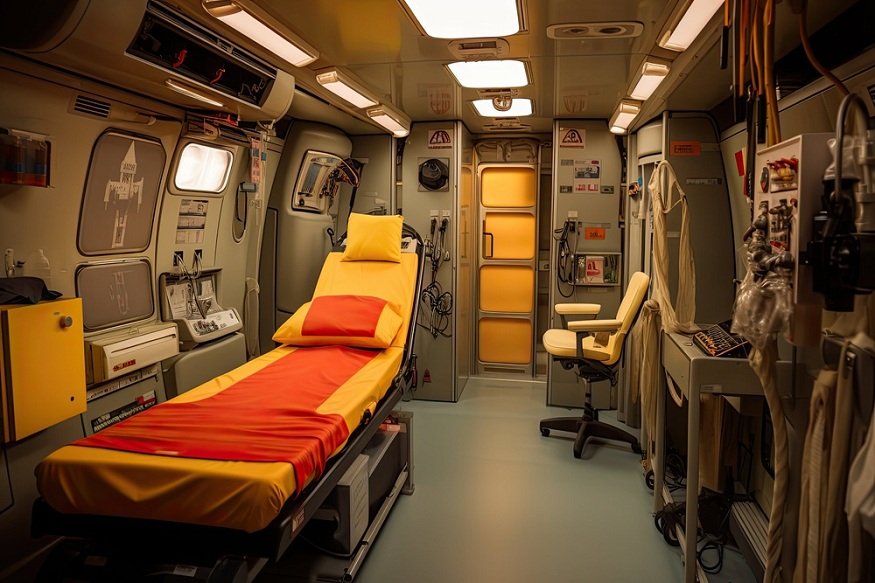
An air ambulance is a small room with a huge job. There is not much space, and there is even less time. When a patient comes through the doors, the crew moves in seconds. So here is something a lot of folks overlook. Power, oxygen, and the gear itself are not three separate problems to solve. They are one. Treat them as separate, and you bake trouble right into the cabin before the aircraft even lifts off.
Three Systems, One Job
Walk through a typical flight for a second. A ventilator has to have steady power. A monitor has to sit where the crew can actually see it. Oxygen has to reach the patient without hoses looping all over the floor. Power runs the machines. Oxygen keeps the patient breathing. Access is what lets the crew grab either one in a hurry. The smart move is planning all three at once, from day one.
What Goes Wrong
Say a monitor gets mounted somewhere a nurse has to hunch over the patient just to read the numbers. Or an oxygen port ends up a few inches past where anyone can comfortably reach. Little things. They pile up fast, though. Now the crew is wrestling the cabin instead of treating the emergency, and time drains away. Sloppy planning brings safety risks too. A cable left loose can trip somebody mid-flight. Too many devices on one circuit, and a machine can cut out right when it matters most. Sounds minor written down. Up at altitude, it is anything but.
Read More: Invisalign in Modern Dentistry: A Clear Revolution in the Oral Care Industry
Layout Is a Safety Feature
A solid cabin layout is not about looking tidy for photos. It is about flow. The crew should be able to move without stopping to think, hand landing on the right control by pure instinct. Power ports belong near whatever draws from them. Oxygen lines stay short and clean. Mounts hold tight through the whole flight, from the runway to touchdown. Get all that right and the crew pours their attention into the patient.
Weight Fights Back
Aircraft are picky about weight. Every bracket, every hose, every battery adds pounds, and pounds cost you range and fuel. Designers live inside that tug of war. They want the cabin to do more. The aircraft wants it to weigh less. And this is where planning the three together earns its keep. Shared mounting points knock out clutter. Smart routing shaves length off each hose and cable. Lighter composite panels carry the weight without dragging things down. More capability, less material. In this business, grams add up.
Tying It All Together
LifePort air medical equipment is of little value if the crew cannot reach it, power it, or connect its oxygen when every second counts—and that is precisely where LifePort has made its name. The company builds interiors that treat power, oxygen, and access as one connected system instead of three loose ends. The cabin ends up feeling planned rather than thrown together, so crews can keep their focus on the person on the stretcher. Good design looks down the road, too. Missions shift. New devices come along. A flexible cabin can be adjusted without a complete teardown, saving money and keeping the aircraft flying rather than grounded in a hangar.
Read More: Why Consumers Are Breaking Up With Traditional Personal Care Brands
Conclusion
Power, oxygen, and equipment access are not a checklist you knock out one item at a time. They are teammates. Plan them together and the cabin works with your crew. Plan them apart and you are asking for delays and hazards. Up there, the layout is the mission. Nail it on the ground, and everything else follows.
 Understanding Quick Access Solutions For Adult Nicotine Alternative Products
  From Lab to Lifestyle: How the Science of Quality Assurance in Manufacturing Reliable Supplements Protects Consumers and Businesses
  Top Myths About Pediatric Home Health Care Debunked
  Immunity IV Drips – Your Frontline Defense Against Modern-Day Fatigue, Illness, and Burnout
  Is Vasectomy Painful? What Men Should Know about the Procedure
  Low Blood Oxygen? These 5 Shocking Causes Might Be Putting You at Risk!
  Why Power, Oxygen and Equipment Access Need to Be Planned Together
  Why Consumers Are Breaking Up With Traditional Personal Care Brands
  Invisalign in Modern Dentistry: A Clear Revolution in the Oral Care Industry
  How Gum Grafting Tech and Multimedia Enhance Beauty